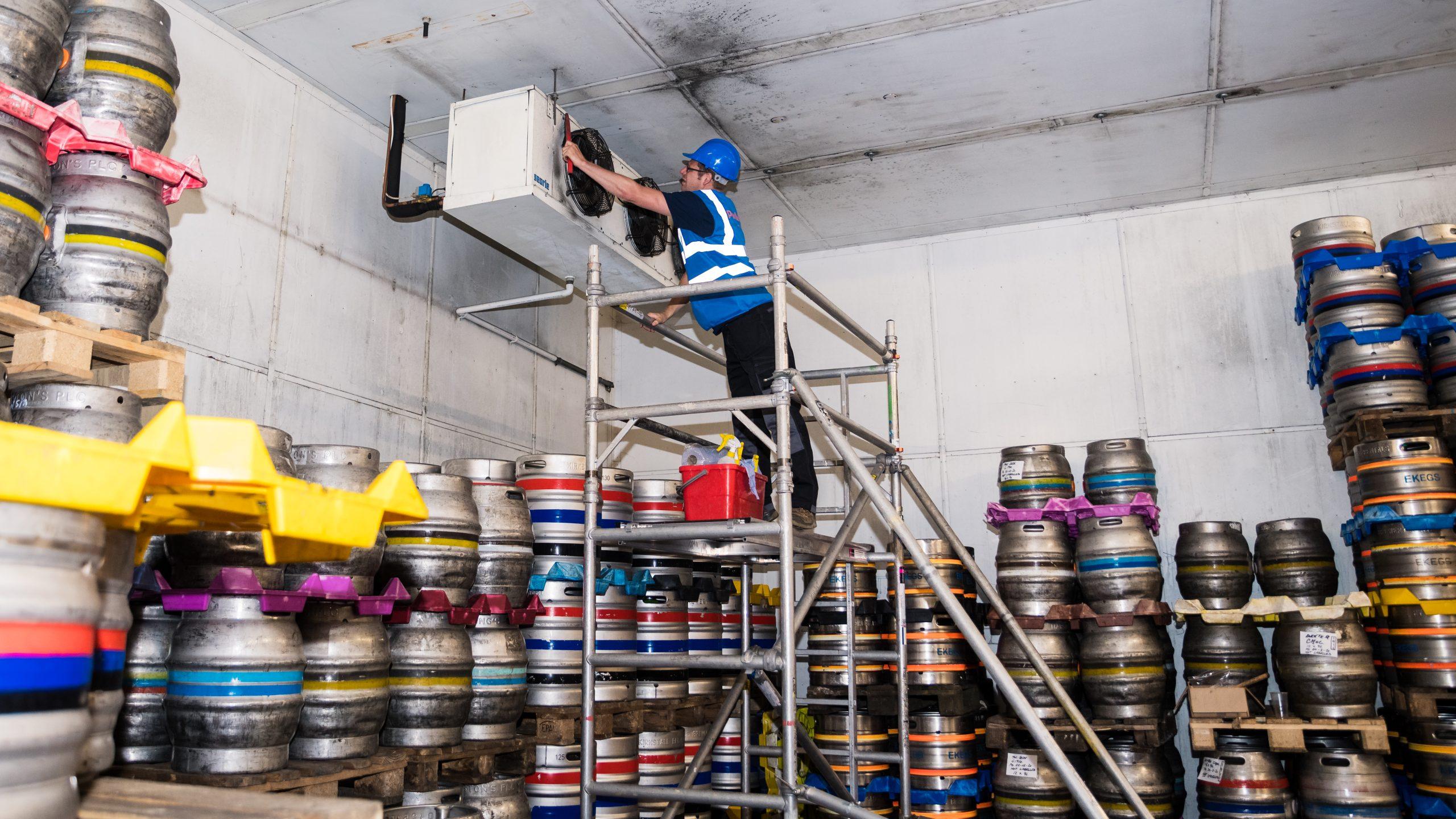
Is your cellar cooling not working? Sometimes it can be difficult to identify issues that arise in your cellar’s cooling systems, and that’s why we’ve listed some common problems and fixes in our cellar cooling troubleshooting guide.
Quick Checks: Beer Cellar Cooling Not Working
Before calling an engineer, there are a few simple checks that can help identify common issues:
- Check the thermostat setting is correct (typically 11–13°C)
- Ensure the power supply to the cooling unit is on
- Confirm that airflow grills are not blocked by stock
- Check that the cellar doors are fully closed
- Look for visible frost on the evaporator coils
- Listen for unusual noises from the condensing unit
If these checks don’t resolve the issue, a qualified refrigeration engineer should inspect the system.
Why Is My Beer Cellar Cooling Not Working?
A decrease in cooling performance is a surefire way to tell if your beer or wine cellar cooling equipment needs repair or replacement. This could be caused by low refrigerant levels, a malfunctioning thermostat or a faulty compressor. Regular cellar cooling maintenance by a qualified engineer will help extend the life of your equipment.
Cellar Cooling Not Working: Common Causes Of Poor Performance
Several technical issues can reduce the effectiveness of cellar cooling systems, including:
- Dirty condenser coils reduce heat rejection
- Incorrect thermostat settings
- Refrigerant leaks lower the cooling capacity
- Poor ventilation around the condenser unit
- Oversized or undersized cooling equipment
- Blocked evaporator airflow inside the cellar
Many of these issues develop gradually, which is why regular servicing is essential to prevent sudden failures.
Regularly Check The Cellar Cooler Temperature
You should check the air temperature and humidity of your cellar daily and record the measurements so that you can identify any trends. This will allow you to take any precautionary action before it becomes a real problem. Higher temperatures and humidity in your cellar can indicate a problem with your system.
To check the correct temperature, use two thermometers and place them in different parts of the cellar at cask/keg beer height and away from walls or the direct airflow from the cellar cooling system.
How Cold Should A Cellar Cooler Be?
Cellar coolers can operate at a range of temperatures but are most often set between 11°C and 13°C.
Maintaining this cellar temperature could significantly reduce your cellar energy costs, as overcooling the cellar by 1°C could increase your costs by up to 10%.
Ideal Beer Cellar Temperature And Humidity
Most beer cellars should operate at:
- Temperature: 11–13°C
- Relative humidity: 60–80%
Maintaining correct humidity helps prevent:
- Drying of wooden casks
- Excess condensation
- Mould growth
Modern cellar cooling systems are designed to maintain both temperature and humidity within the ideal range.
Blocked Airflow Grills
You should regularly clean the grills on your cooling system to remove dust and debris and make sure that none of your stock is blocking them, as this causes your cellar cooling to overwork and can cause your system to overheat. This will increase the cost of operating your equipment, which can be up to 40% annually.
Since operating costs typically run more than £1,500 a year, keeping your unit in good condition could save you up to £800 a year.
Dirty Condenser Coils
The condenser coil removes heat from the refrigeration system. If it becomes covered in dust, grease or debris, the system cannot release heat efficiently.
This can cause:
- Higher running temperatures
- Increased energy consumption
- Compressor overheating
- System shutdown
Condenser coils should be cleaned regularly as part of routine cellar cooling maintenance.
Keeping Your Unit On
The cellar cooling system should be switched on at all times, and the cellar fans should run continuously. Some people switch off the system when they are working in the cellar, as it does tend to be noisy and pushes out cold air, but staff don’t always remember to switch it back on, which results in the temperature increasing.
You should also make sure that your cellar doors aren’t being left open, as this will let warm air enter and cold air escape (above-ground cellars will benefit from strip curtains) and could also cause excess frost on the evaporator that the defrost mechanism cannot cope with. A manual defrost may be required, which involves switching off for 24 hours.
Remember not to switch off your unit at night. If the cellar is cold enough, it will switch itself off, as required. To help your cellar cooling equipment in the long run, particularly your condensing unit, consider installing ambient beer cooling, which makes use of the ambient air temperatures in winter to cool the cellar.
Unusual Sounds Or Odours
Should your cellar cooling system be producing odours or making unusual noises, it can indicate a problem. Worn or broken parts can cause squeaking, hissing or grinding sounds. Similarly, a musty or burning smell can indicate a problem. Should you experience any of these, contact a qualified engineer immediately.
Water Leaks From Cellar Cooling Equipment
The majority of the time, a water leak from cooling equipment will be as a result of a blocked drain and will likely be condensation from the evaporator coils, but in rare cases, it could be originating from a refrigerant leak. If you notice a leak, contact a qualified engineer as soon as possible. A refrigerant leak is important to get fixed immediately as part of your responsibilities towards F-Gas regulations in the UK.
Preventing Cellar Cooling Problems
Most cellar cooling failures can be avoided with regular preventative maintenance. A professional service will typically include:
- Cleaning condenser and evaporator coils
- Checking refrigerant pressures
- Inspecting electrical components
- Testing thermostat accuracy
- Checking airflow and ventilation
Servicing twice per year is recommended for most commercial cellar cooling systems.
Cellar Cooling Troubleshooting – General Advice
There are also a number of things that you can do to ensure the efficient running of your cooling system. Here is our general cellar cooling troubleshooting advice:
- Replace standard tungsten bulbs with LED or fluorescent strip lighting. Turn off lighting whenever you can to avoid excess heat production.
- Regularly clean evaporators and heat rejection coils to allow free airflow; that way, they’ll run more economically.
- You need to ensure that your equipment is properly maintained so that it operates efficiently. If your equipment is not maintained properly, it will need to run for longer periods of time, which will cost you more money and could potentially break down, disrupting your business.
- Put any heat-producing equipment, such as line python coolers for beer and soft drinks, cooling cabinets and icemakers outside the cellar in a well-ventilated area.
- If heating pipes have to pass through cellars, pipes & fittings should all be insulated and draught stripping applied in places where pipes pass through walls.
- Beer Cellar doors and hatches should also be draught-proofed and insulated. Access doors should be self-closing and shut immediately after deliveries.
When Should You Replace A Cellar Cooling System?
If your cellar cooling system is more than 10–15 years old, it may be reaching the end of its service life.
Signs that replacement may be more cost-effective than repair include:
- Frequent breakdowns
- Rising electricity costs
- Difficulty maintaining stable cellar temperatures
- Expensive refrigerant repairs
Newer cellar cooling systems are typically more energy efficient and easier to maintain.
Professional Cellar Cooling Support
If your cellar cooling system is not maintaining temperature or showing signs of failure, our engineers can diagnose the issue quickly and recommend the most cost-effective solution.
At Pinder Cooling, we support pubs, bars, restaurants and breweries across the North of England with:
- Cellar cooling repairs
- Preventative maintenance
- System upgrades and replacements
- Energy efficiency improvements
If your system is struggling to maintain temperature, contact our team, and we’ll help restore reliable cooling to protect your stock.
You can also download our beer cellar cooling troubleshooting guide to help you identify fixes for any issues.
Take our Air Conditioning or Commercial Refrigeration Healthcheck to see how healthy your equipment is, and to see if it’s due for a maintenance check.
About Pinder Cooling
Pinder Cooling provides commercial air conditioning and commercial refrigeration installation services to clients across the North of England, including Leeds, Manchester, Wakefield, Liverpool, Sheffield and Hull.