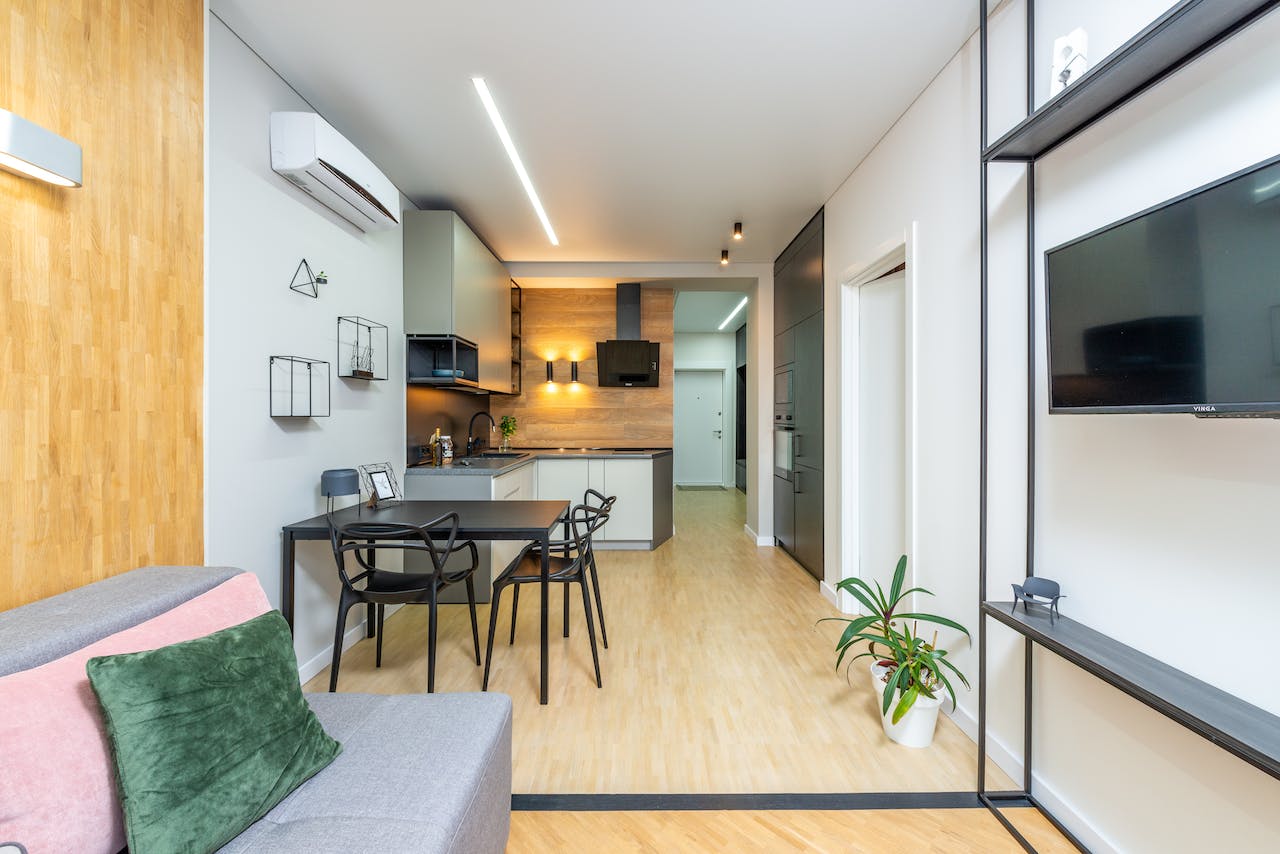
Heating your commercial property or home with air conditioning is done using the same technology as cooling. Heating with air conditioning works by transferring heat from one area to another. In cooling mode, the air conditioner transfers heat from the inside of the building to the outside. In heating mode, the air conditioner transfers heat from outside the building to the inside.
How Does Heating With Air Conditioning Work?
When heating with air conditioning, the AC unit heats your rooms by reverse cycle, meaning that in heating mode, they absorb heat from the outside (even in colder weather) and transfers it indoors to provide warm air to one or more rooms.
A conventional air conditioner might only produce cool air, although modern AC units increasingly produce warm and cold air.
Is Air Conditioning The Same As A Heat Pump?
Most modern air conditioning systems are air-to-air heat pumps.
A heat pump works by extracting heat from the outside air and transferring it indoors. Even when outdoor temperatures drop close to freezing, there is still usable heat energy available.
Unlike gas boilers or electric heaters, heat pumps do not generate heat by burning fuel or using resistance elements. Instead, they move heat, which is why they are significantly more energy efficient.
Benefits Of Heating With Air Conditioning
Heating with air conditioning rather than other heating methods provides several advantages. The benefits of heating with air conditioning include:
- Energy efficiency: Modern air conditioners are very energy-efficient, especially when compared to older heating systems such as electrical heating and baseboard heaters. This is because air conditioners use a process called heat transfer to move heat from one place to another, rather than generating heat directly. Couple your air conditioning system with a renewable energy source, and you’re on to a winner! Modern heat pump air conditioning systems typically achieve a Coefficient of Performance (COP) of between 3 and 5. This means for every 1kW of electricity used, the system can produce 3–5kW of heat, making it significantly more efficient than electric resistance heating, which produces 1kW of heat per 1kW of electricity.
- Cost savings: Because air conditioners are so energy-efficient, they can save you money on your heating bills. In fact, a UK study conducted by University College London (UCL) in 2008 on the energy efficiency of air conditioning for heating found that air conditioning can be up to 50% more efficient than other heating methods, such as electric heaters. The study also found that air conditioning can be a more efficient way to heat a home than gas central heating, especially in well-insulated homes. The study concluded that heating with air conditioning is a viable option for a commercial property or home. While electricity can cost more per unit than gas, heat pump systems offset this through higher efficiency. Because they generate multiple units of heat for each unit of electricity consumed, total running costs can still be competitive. Actual savings depend on insulation levels, system design and usage patterns.
- Improved comfort: Air conditioners are highly efficient at providing even and consistent heating throughout your commercial property or home. This is because air conditioners circulate the air throughout the room, rather than simply heating the air in one area.
- Better indoor air quality: Air conditioners, such as the Panasonic nanoe™X, can help to improve indoor air quality by filtering out pollutants and allergens. This reduces the risk of allergies and asthma.
- Reduced greenhouse gas emissions: Heating with air conditioning produces fewer greenhouse gas emissions than gas heating. This is because air conditioners do not burn fossil fuels to generate heat. Instead, they use electricity, which can be generated from renewable sources such as solar and wind power.
- Safer operation: Air conditioning heating systems are safer than gas heating systems as they do not produce carbon monoxide.
- No unsightly radiators making your rooms look untidy.
- Air conditioning is also a relatively low-maintenance heating method. Air conditioners typically only need to be serviced once a year, and they can last for many years with proper care.
Why More UK Businesses Are Switching To Electric Heating
With the UK’s commitment to achieving net-zero carbon emissions, many businesses are reviewing how they heat their premises. Gas heating systems are increasingly seen as a higher-carbon option, while electrically powered heat pumps align more closely with long-term decarbonisation strategies, particularly when paired with renewable electricity.
For commercial buildings looking to improve EPC ratings and reduce long-term energy risk, heat pump technology offers a future-proof solution.
Commercial Benefits Of Heating With Air Conditioning
For commercial premises, heating with air conditioning offers additional advantages:
- Zoned temperature control across multiple rooms or departments
- Simultaneous heating and cooling in VRF systems
- Lower maintenance compared to wet heating systems
- No pipework or risk of water leaks
- Faster installation compared to replacing a boiler system
When Is Heating With Air Conditioning Not The Best Option?
While heating with air conditioning works extremely well in most properties, it may not be ideal where:
- Buildings are poorly insulated
- Very high water temperatures are required (e.g. for certain industrial processes)
- Large open industrial spaces need high-temperature heat
In these cases, a hybrid system or alternative heating solution may be more appropriate.
How To Choose The Right Air Conditioner For Heating
When heating with air conditioning, choosing the right AC system for your premises is crucial. Most modern air conditioners will provide both heating and cooling. Speak to us about your requirements and we will advise on the right equipment for your needs, whether it’s for heating an office or making your home cosy in winter.
Below are a few things to consider and questions to answer before you speak to an air conditioning installation expert.
- Consider the size and climate of your home. We’ve previously written about how to work out what size air conditioner is right for you. Knowing the size of the space and what that space is used for means we can better advise you on the best air conditioning and heating solution for your needs.
- Is it just one room, or multiple rooms where air conditioning is needed?
- What features are important for you? Air conditioners can come with a variety of features such as programmable thermostats, remote controls and even WiFi connectivity so it can be controlled via your mobile phone.
Tips for heating your space efficiently with air conditioning
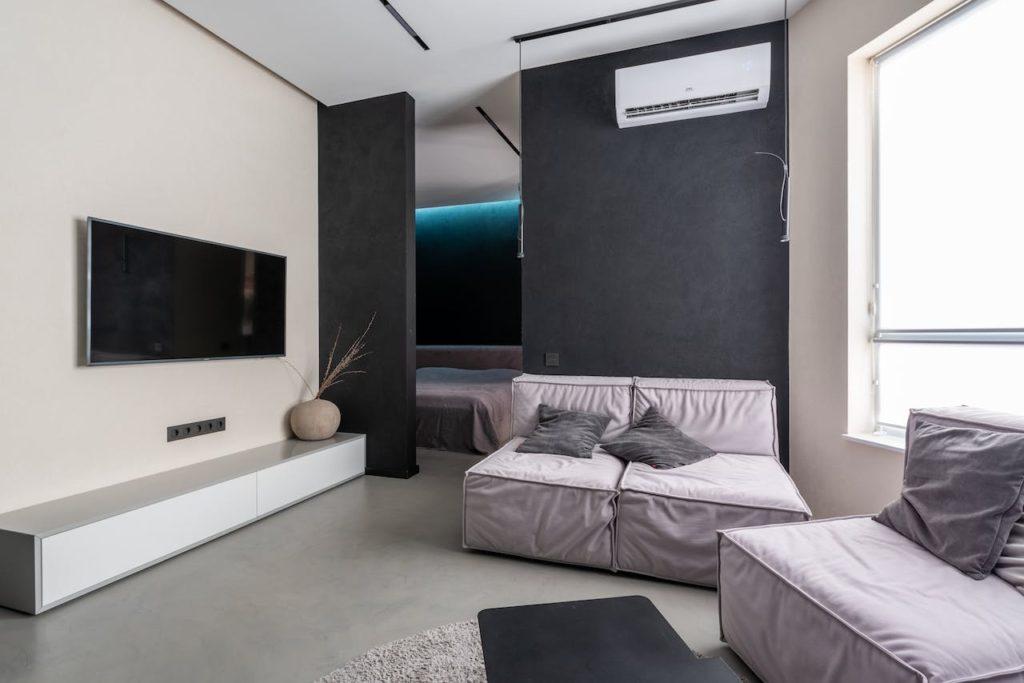
It’s one thing heating with air conditioning, but is your space being heated efficiently? Below are our recommendations for heating your space efficiently.
- Set your thermostat to the lowest comfortable temperature. The lower the temperature you set your thermostat to, the less energy your air conditioner will use. 18-20C is comfortable for most people.
- Use a programmable thermostat that allows you to set different temperatures for different times of the day and night. This can help you save energy when you are not home or when you are sleeping.
- Seal air leaks around your windows and doors that allow heat to escape from your home, which can force your ac unit to work harder to heat your home. You can seal air leaks around your windows and doors with caulk or weatherstripping.
- Insulating your attic and walls helps to keep heat in your home during the winter and out of your home during the summer. This can help your air conditioner work more efficiently.
- Keep your air conditioner’s filters clean, as dirty air filters can restrict airflow and make your air conditioner work harder. You should check your air conditioner’s filters every month and replace them as needed.
- Use your air conditioner’s fan setting to circulate the air in your home without heating or cooling it. This can help to distribute the heat evenly throughout your home and make it feel more comfortable.
- Zoning your heating system can help with energy saving by only heating the areas of your home that you are using.
How to maintain your air conditioner for optimal heating performance
The main recommendation for heating your home efficiently with air conditioning is to maintain your air conditioning equipment regularly. We recommend a professional air conditioning service annually.
Scheduling regular maintenance with a qualified HVAC technician will help to increase the working life of your equipment in the long term by checking filters, coils and by generally making sure your equipment is in good working order. This can prevent major damage to your air conditioner that might result in repairs.
A professional service will include:
- Checking refrigerant levels (in line with F gas regulations)
- Cleaning indoor and outdoor coils
- Inspecting electrical components
- Testing heating performance
- Ensuring controls and thermostats are calibrated correctly
Heating With Air Conditioning vs Gas Central Heating
| Air Conditioning (Heat Pump) | Gas Heating |
| No combustion | Higher carbon output |
| Lower carbon emissions | Requires a flue and gas supply |
| Provides heating and cooling | Heating only |
| Minimal internal pipework | Radiators take time to warm up |
| Fast response time |
Conclusion
As we have discussed, there are many benefits to heating with air conditioning. We have seen that studies show that using air conditioning to heat your property, whether commercial or domestic, is a viable option that is energy efficient and can save you money.
We have also discussed the importance of choosing an air conditioner that is right for your space and situation and using it efficiently. The wrong air conditioner, poor maintenance and incorrect settings can negate a lot of the benefits covered in this article.
To learn more about how you can use your air conditioning to heat your home or commercial property, contact us to discuss your needs.
FAQs
Can I use my AC as a heater in winter?
Your AC can heat the room in winter only if it has a reverse cycle function or a heat pump. This allows it to switch from cooling to heating mode and transfer heat from outside to inside. A cooling-only AC cannot heat the room in winter.
How efficient is heating with air conditioning?
Heat pump air conditioning systems are rated using the Seasonal Coefficient of Performance (SCOP) for heating efficiency and SEER for cooling efficiency. A 2kW air conditioning system produces 2.7kW of heating output from the same unit. Compared to a 2kW electric heater, that’s 30% more heat output.
Does it cost more to run central heat or central air?
Even in energy-efficient homes, the running costs of traditional central heating systems can be higher than those with a well-maintained AC system. For older premises, the cost of traditional sources of heating can be much higher
Should I replace my radiators with air conditioners? Although air conditioners are typically used for cooling in the summer, they can also be used for heating in the winter. In fact, air conditioners are very efficient, producing about five times more heat than boilers for each kilowatt of electricity used.
Considering Switching To Heat Pump Heating?
If you’re reviewing your current heating system or looking to reduce long-term energy costs, our team can assess whether heating with air conditioning is suitable for your property.
If you’re considering heating with air conditioning, we design and install systems across commercial and residential properties throughout the North of England.
About Pinder Cooling
Pinder Cooling provides commercial air conditioning and commercial refrigeration installation services to clients across the North of England, including Leeds, Manchester, Wakefield, Liverpool, Sheffield and Hull.